
❤️ World Heart Day 2026: Don’t Ignore the Warning Signs
Published by DBAS CARES | Health Awareness
29 September 2026
Every year on 29 September, World Heart Day brings global attention to cardiovascular health and encourages individuals and communities to take heart health seriously. The World Heart Federation’s 2026 messaging emphasizes that heart disease can sometimes “hide in plain sight,” reinforcing the importance of awareness and timely action.
At DBAS CARES, our message this World Heart Day is simple: Recognise the warning signs. Don’t ignore concerning symptoms. Seek timely medical attention.
Heart Attack Warning Signs You Should Know
A heart attack does not always begin with dramatic or unbearable chest pain. Symptoms can sometimes develop gradually or may be mistaken for less serious problems.
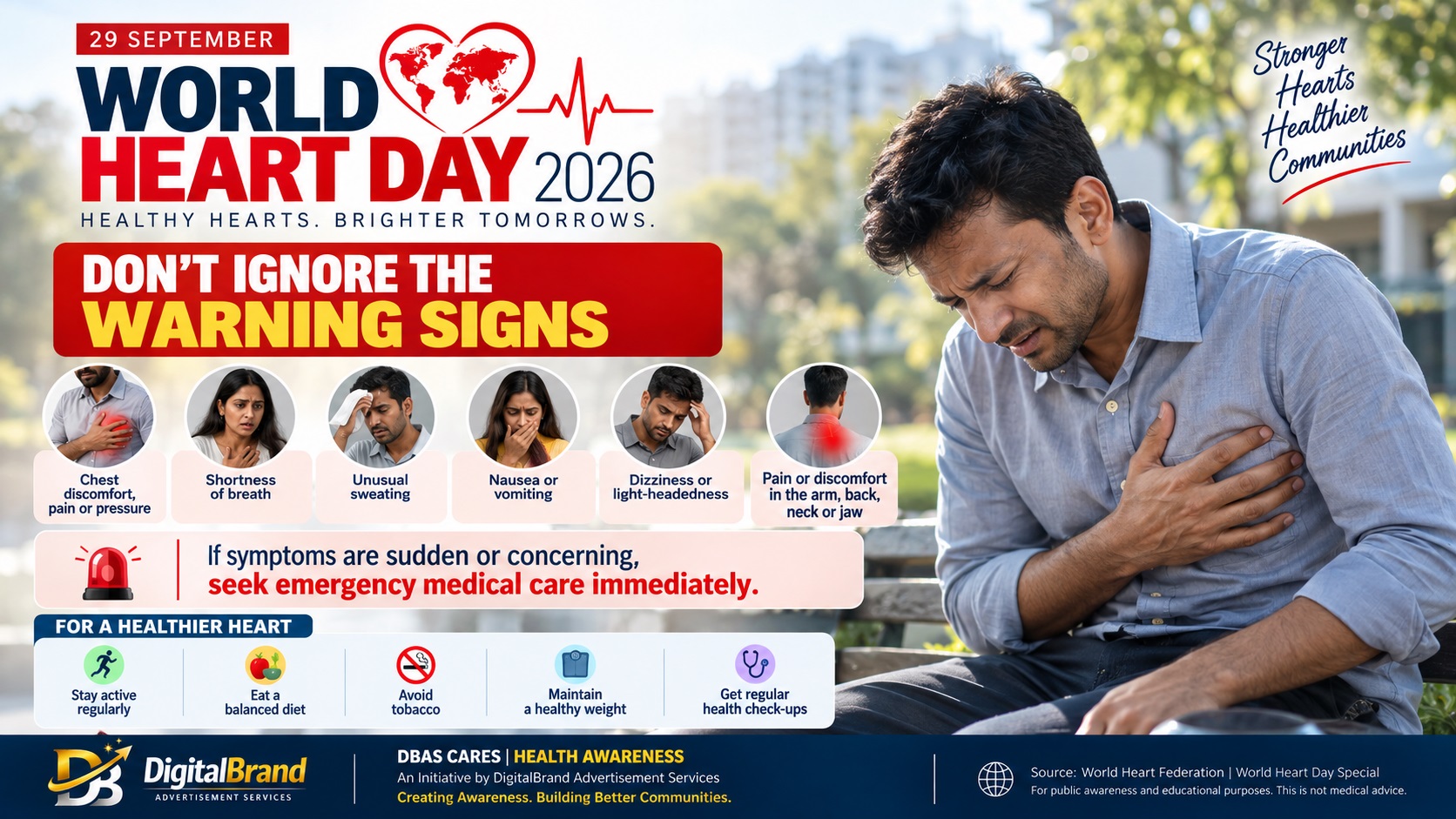
According to the American Heart Association and World Health Organization, possible warning signs can include chest discomfort or pressure, shortness of breath, nausea or vomiting, cold sweating or light-headedness, and pain or discomfort that may spread to the arms, back, neck, jaw or stomach. Symptoms can also vary between individuals.
❤️ Watch for these warning signs:
• Chest pain, pressure or discomfort
• Shortness of breath or breathlessness
• Unusual or cold sweating
• Nausea or vomiting
• Dizziness or light-headedness
• Pain or discomfort in one or both arms
• Pain or discomfort in the back, neck, jaw or stomach
• Unusual weakness or tiredness
Women may sometimes experience symptoms such as shortness of breath, nausea, back or jaw pain, or unusual tiredness in addition to or sometimes less prominently than chest discomfort.
⏱️ Don’t Wait for Symptoms to Become Severe
One of the most important messages this World Heart Day is not to dismiss new or concerning symptoms.
Some heart attacks are sudden and intense, but others can begin more gradually with relatively mild discomfort. New, worsening or persistent chest discomfort; particularly when accompanied by breathlessness, sweating, nausea, dizziness or upper-body discomfort; requires urgent medical attention.
If you or someone around you develops symptoms that could indicate a heart attack, seek emergency medical care immediately rather than waiting to see whether the symptoms disappear.
🌿 Everyday Choices Matter for Heart Health
Heart awareness isn't only about responding to an emergency. Protecting cardiovascular health also involves paying attention to everyday risk factors and making sustainable lifestyle choices.
Regular physical activity, avoiding tobacco, maintaining a balanced diet and monitoring important health indicators such as blood pressure can form part of a broader approach to cardiovascular health. Cardiovascular disease remains a major global health burden, making prevention and early recognition important public-health priorities.
This World Heart Day, Remember:
• Know the warning signs.
• Listen to your body.
• Don't unnecessarily delay medical attention.
• Encourage your family and friends to understand heart-health warning signs too.
Because awareness today could make a critical difference tomorrow.
❤️ Early Recognition. Timely Action. A Healthier Heart.
DBAS CARES | HEALTH AWARENESS
An Initiative by DigitalBrand Advertisement Services
Creating Awareness. Building Better Communities.
Through DBAS CARES, we aim to share useful, responsible and easy-to-understand public-awareness information that can help individuals, families and communities stay better informed.
Disclaimer: This article is intended for public awareness and educational purposes only and is not a substitute for professional medical advice, diagnosis or treatment. If you experience symptoms that may indicate a medical emergency, seek emergency medical assistance.